Condition Guide · Atlanta, GA
Most heel pain settles down within a few months. When it doesn't — when that first-step-in-the-morning stab is still there after a year of stretching, icing, and new shoes — the problem is usually no longer inflammation. It's degeneration of the plantar fascia itself, and that's a different problem with different answers.
Firsthand Account
Hear what the TenJet procedure involved from someone who has already had it, rather than from a brochure.
TenJet Patient Testimonial
Video courtesy of HydroCision, Inc., the maker of TenJet®. Individual results vary; this patient's experience is not a guarantee of outcome. Talk with a specialist about whether the procedure is appropriate for you.
Understanding The Condition
The name implies inflammation — -itis — but researchers looking at long-standing cases under the microscope rarely find much of it. What they find instead is a fascia that has broken down at the microscopic level and failed to rebuild, much like a rope fraying from the inside. That distinction is the whole reason chronic cases behave so differently from fresh ones.
See The Procedure
Official demonstration video from HydroCision, the maker of TenJet, alongside a look at how ordinary inflammation differs from the deeper tissue degeneration behind stubborn heel pain.
TenJet Achilles & Plantar Fascia Tendinopathy — Procedure Technique


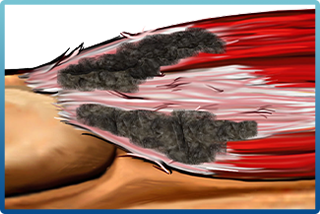
Diagrams and video courtesy of HydroCision, Inc.
Where TenJet Fits
When months of conservative care haven't resolved chronic plantar fasciitis, TenJet gives a specialist a way to address the degenerated fascia directly — without an open incision through the heel and the long recovery that comes with it.
Common Questions
Generally a meaningful trial of stretching, orthotics, therapy and activity modification over several months. Tenotomy is considered for pain that persists beyond that.
Not always. In one published case thickness improved by roughly 16 percent and remained above normal, yet the patient's pain resolved and he returned to running.
Access is planned from the imaging and made where the degenerated tissue can be reached safely. It is a small incision, closed simply, rather than an open surgical wound.
Published data describes noticeable change around two weeks with continued improvement over roughly three months, though heel pain recovery varies considerably between patients.
This information is general and is not medical advice. Whether any procedure is appropriate for you can only be determined by a physician who has examined you and reviewed your imaging.